
Getting lost in the woods stinks. I’ve been there, and it’s not fun.
Forest trail navigation can feel overwhelming, especially for those just starting out. You might be wondering how to read a map or which tools to use. Trust me, it doesn’t have to be complicated.
In this article, I’ll break down the essentials for you. I’ll share my own experiences and lessons learned from countless trails. You’ll get practical tips that help you feel more confident on your next adventure.
We’ll go over the tools that work best for navigating those winding paths. You’ll discover how to plan your route effectively, so you can spend less time worrying and more time enjoying nature.
With some preparation, you’ll find that navigating the woods can be a breeze. Together, we’ll explore how to make the most of your time out there. Get ready to take your skills to the next level.
The Untamed Path: Wooded Navigation’s True Mastery
Forest trail navigation is not just a skill; it’s an art form. Dense woods challenge you with reduced visibility, deceptive uniformity, and the sheer audacity of nature. You ever notice how every tree looks the same when you’re lost?
That’s the thrill and terror of it. But, don’t let that scare you off.
When you master guiding yourself through this wilderness, the stress melts away. You’re not just wandering aimlessly. Effective navigation turns a potential mess into a satisfying exploration.
You connect with the earth like never before, and that’s worth more than reaching any destination.
Without good guidance, time is wasted, risks multiply, and those scenic vistas? You’re likely to miss them. It’s not just about getting lost.
Confidence erodes and what should have been exciting becomes a chore. But the payoff? It’s freedom.
It’s roaming further, finding hidden gems, and savoring solitude without a trace of anxiety.
Wouldn’t you rather immerse in the moment instead of worrying about the next turn? Proactive navigation lets you do just that. Mastery isn’t about the endpoint; it’s about enriching every step of the journey.
For more on navigating tough terrains like crossing waterways safely fording rivers, there’s plenty to explore.
Timeless Wisdom: Mastering Forest Trail Navigation
Let’s talk about topographic maps. They’re not just fancy pieces of paper. They’re important for anyone hitting the forest trails.
Reading contour lines is the first step. These wiggly lines show elevation changes (basically, how steep or flat the land is). The closer the lines, the steeper the terrain.
Now, identifying terrain features like ridges, valleys, and saddles is a game-changer. You’ll know if you’re about to tumble down a hill or cross into another valley. But maps alone won’t cut it.
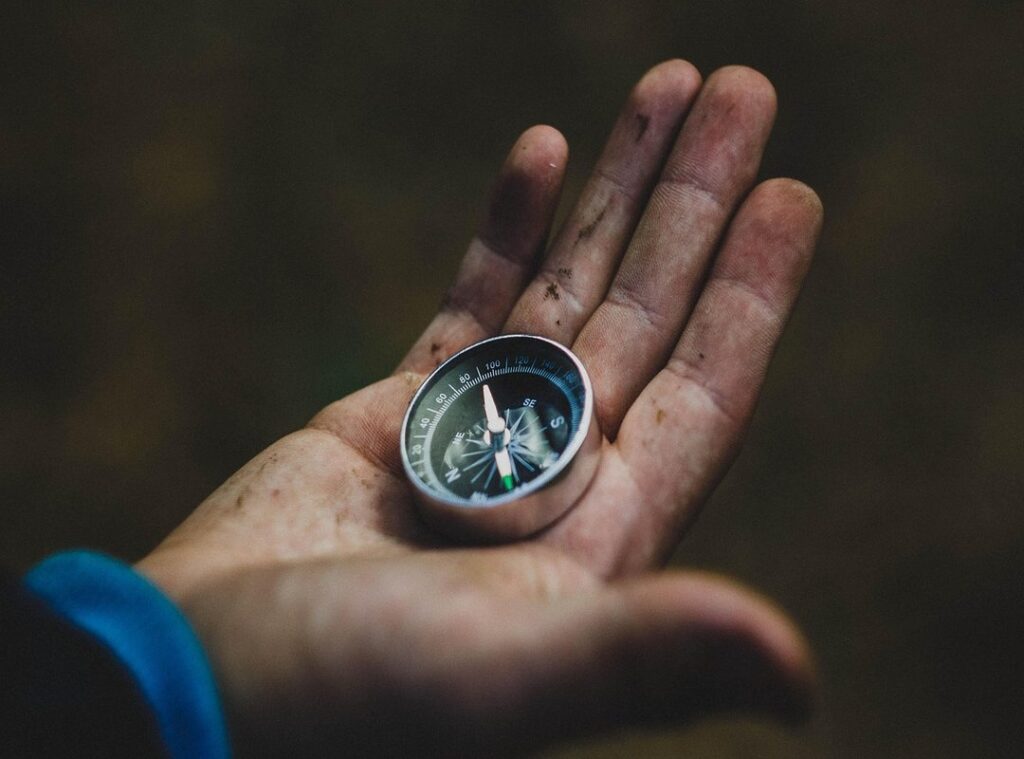
Enter the compass: your trusty, battery-free partner. Learning to orient your map with a compass is key. You align the map’s north with true north.
This sets the stage for taking a bearing (a direction you want to travel). Hold the compass level, point it where you want to go, and follow it like a trail of breadcrumbs.
Let’s get into triangulation. It’s a fancy term for using landmarks to find your exact position. Spot two or three known objects, take bearings on them, and voilà.
You’ve got your location pinned down.
Maps and compasses work together beautifully, especially when tech fails. Practice these skills regularly. It’s like learning to ride a bike.
You’ll never forget. And let’s not forget map care; waterproofing your map saves it from rain-induced tears.
So, are you ready to ditch the GPS and own the forest with your newfound abilities?
Navigating the Wild: GPS and Digital Mapping
Let’s talk about forest trail navigation. It’s not as simple as it seems, is it? You can have the latest GPS, but if you’re under dense canopy or deep in a canyon, you’re going to face issues.
Why? Because GPS signals struggle there. But don’t worry, there’s a way around it.
Combine your GPS with good old-fashioned map skills. You need both, trust me.
Handheld GPS devices are great. They’ve got accuracy, waypoint management, and track logging. But don’t underestimate smartphone apps either.
Apps like trailforks let you download maps offline. Perfect when you’re out of range. They also offer custom routes and satellite imagery overlays.
Pretty neat, right?
Now, choosing digital maps can be tricky. Vector maps are sleek and fast, while raster maps give you that detailed topographic view. Want to explore public lands?
Make sure your maps have that data. And always bring a backup map (paper, remember those?) just in case.
Lastly, prep is key. Pre-planning routes and studying satellite images before hitting the trail gives you a huge advantage. And don’t forget about battery management and protective cases.
Your gear is only as good as its power source.
Nature’s Compass: Reading the Environment for Subtle Cues
When you’re deep in the woods, your GPS might as well be a paperweight. I mean, does it even work under a dense canopy? Forest trail navigation is an art, not a technology.

It’s about reading signs nature generously leaves for us. The sun’s position can guide you, but what if it’s overcast? You can still use the shadows (if) you know how to look.
Let’s talk about moss. People always say it grows on the north side of trees. That’s not always true.
Moss just needs moisture, so it can grow anywhere damp. Tree lean and the direction of water flow are other indicators. You can’t just guess; you need to observe and learn.
Animal trails offer clues, too. Not all are reliable, and some lead to dead ends or worse. Knowing which trails to trust is a skill you develop over time.
It’s like learning a new language, one spoken by the forest itself. And yes, it takes practice.
Terrain features can guide you through this natural maze. Look for drainages, ridgelines, and saddles. They’re like nature’s highways and barriers.
Developing a keen sense of awareness is important. Notice the subtle shifts in flora, rock formations, and microclimates. These changes can signal direction or proximity to features you seek.
They tell you where to go and where you can’t. And if you’re into desert adventures, Navigating Desert Unforgiving Space offers takeaways for dry terrains.
Master these cues, and you’ll find that every journey becomes a richer, more connected experience.
Navigating the Wild: Mastering Trail Challenges
Planning is everything when it comes to forest trail navigation. Ever tried winging it? It’s like jumping into a new series without watching the pilot.
Study maps, check weather patterns, and (this) is key (tell) someone where you’re headed.
Your gear is your lifeline. Pack extra batteries, a power bank, a headlamp, a signaling mirror, a whistle, and basic first aid. Lost?
STOP (Stop, Think, Observe, Plan). It’s not just a catchy acronym; it’s your survival mantra.
And for the love of peace of mind, carry a satellite messenger or a personal locator beacon. In the woods, staying calm and prepared is your greatest ally.
Embrace the Thrill of Exploration
The path through wooded areas doesn’t have to be intimidating. With the right techniques for forest trail navigation, I promise you can turn that uncertainty into excitement. Mastering traditional tools, modern tech, and keen observation transforms every step into a chance for discovery.
Why settle for fearing the woods when you can revel in them?
I encourage you to practice your skills. Plan your next adventure and embrace the thrill of the wild. It’s not just about following a path; it’s about uncovering the wonders around you.
Don’t just dream about it (get) out there. The forest awaits. Call now to start your journey into the great unknown.
 Off-Road Operations & Gear Specialist
Gavryth Lornquill is responsible for overseeing operational coordination and equipment expertise at FMBOffroad.com. With a deep understanding of motorcycle performance, riding gear, and trail preparation, he helps ensure that every feature and recommendation aligns with the needs of serious riders. Gavryth works closely with the team to research products, test off-road essentials, and provide practical insights for the community. His passion for rugged terrain and technical precision allows the platform to maintain credibility among adventure riders and enthusiasts. Whether organizing field projects or assisting with gear-focused content, he brings reliability and experience to the brand. His commitment to performance and safety continues to support the adventurous spirit of FMBOffroad.com.
Off-Road Operations & Gear Specialist
Gavryth Lornquill is responsible for overseeing operational coordination and equipment expertise at FMBOffroad.com. With a deep understanding of motorcycle performance, riding gear, and trail preparation, he helps ensure that every feature and recommendation aligns with the needs of serious riders. Gavryth works closely with the team to research products, test off-road essentials, and provide practical insights for the community. His passion for rugged terrain and technical precision allows the platform to maintain credibility among adventure riders and enthusiasts. Whether organizing field projects or assisting with gear-focused content, he brings reliability and experience to the brand. His commitment to performance and safety continues to support the adventurous spirit of FMBOffroad.com.